On a mid-spring afternoon in 2012, I decided to sit down and chat with my ancient Greek history professor in his office. I had never been one to attend office hours or communicate with my instructors very often, but I had a sense that Professor Greg Anderson was someone who was worth getting to know.
As it was, our conversation that afternoon helped solidify in my mind why history was my true academic passion. A year and a half later, when I had the opportunity to take another of his courses, I leapt at the opportunity. Dr. Anderson's lectures, delivered enthusiastically in his trademark British accent, are a clear indication of his charismatic, conversational personality.
Last week, we sat down in his office once again—this time, to conduct an interview for a segment called "Office Hours."
Let's get started with an obvious one: What inspired you to devote yourself to the study of Ancient Greece?
As it was, our conversation that afternoon helped solidify in my mind why history was my true academic passion. A year and a half later, when I had the opportunity to take another of his courses, I leapt at the opportunity. Dr. Anderson's lectures, delivered enthusiastically in his trademark British accent, are a clear indication of his charismatic, conversational personality.
Last week, we sat down in his office once again—this time, to conduct an interview for a segment called "Office Hours."
Let's get started with an obvious one: What inspired you to devote yourself to the study of Ancient Greece?
"I would say it was, like a lot of people, quite
accidental. I wasn’t a very serious student as an undergraduate—I wanted to do
the degree that I thought would be easiest for me while allowing myself to have
fun in college. It may not sound like fun, but I chose to do a degree in Latin."
"As a result, I was told I had to learn ancient Greek, as well. The guy who taught it just made the whole thing capture my imagination, and I found Greek—in the end—way more interesting than Latin. So, it started with learning Greek from a particularly inspirational teacher in a class that that I really didn’t want to do."
Other than your period of expertise, what is your
favorite historical era?
 |
| An aerial view of the trenches on the Western Front. British trenches on the left, German on the right, and "No Man's Land" in between. |
"One period
that I’ve read about actively would be the First World War. I think for a lot
of British people there’s a strange kind of poignancy to it."
What is the most unexpected place your job has ever
taken you?
"I guess that would be Yellow Springs in Ohio, where I live right now, which is not the kind of place that anyone expects would exist in Ohio."
"It’s a fervently countercultural place that is completely against the mainstream of Midwestern life. It’s a rather improbable, eccentric place full of very eccentric people, and is basically run by women—and all the better for that."
You are a true fan of music. Could you name three albums that you think everyone should listen to from start to finish?
"Most of us grew up knowing people who experienced the Second World War in some kind of a way—but the First World War was slightly more remote. I suppose it’s a more ambivalent experience, because it isn’t so obviously a black and white, good and evil type of thing like the Second World War seems to be. And so you wonder why it was so necessary that all of these millions of people were sacrificed so mercilessly on the Western Front."
"In Britain there’s a whole sort of culture that’s sprung up around the First World War—poets who were there who’ve left incredibly heart-rending images of life in the trenches—and I’ve always been quite fascinated."
What is something about yourself that may surprise your students?
"I suppose the most obvious thing would be that I play bass in a rock band. I mean, it’s a real geezer-rock cover band—I’m actually the youngest member of the band. Two members are late-fifties at best, one is mid-fifties, and I’m only early-fifties."
"We play mostly late-60’s/early-70’s music, towards the softer end of the rock spectrum—but hopefully the more interesting end of it, as well. It’s great fun to play with these guys, the other three are far better players than I am."
"We play mostly late-60’s/early-70’s music, towards the softer end of the rock spectrum—but hopefully the more interesting end of it, as well. It’s great fun to play with these guys, the other three are far better players than I am."
"I was in a punk band in the 70’s as a guitarist, so I guess that might be another thing that might surprise students. But we were just so awful that I don’t even want to think about it."
Who is the most fascinating historical figure, in
your opinion?
"The figure that I find hardest to understand
as a historical phenomenon is Karl Marx. He has probably had as great an influence
on human experience as anybody in the last two hundred years, for better or worse. I just find it really hard to understand where he came from, it’s
almost like he comes from another planet out of nowhere—to anatomize the modern
capitalist world, to somehow critique it from the inside as if he were coming
from the outside. That’s what all real social analysts hope to do."
 |
| German intellectual Karl Marx (1818-1883) |
"I think
even if the actual societies that claimed to be following the ideas of Marx
have all proven themselves to be horrific, catastrophic failures, Marx’s
analysis of capitalistic society still has an enormous amount of value—far more
than mainstream economic thinking, because all that’s doing is re-describing
the world as it already understands itself…. I don’t know, am I allowed to say
Karl Marx?"
I have always wanted to ask this: What is it that
is so "Great" about Britain?
“(Laughs) Many things not great about it, I
would absolutely say—probably no nation has visited more discomfort on other
parts of the world as Britain has. There’s just no getting around that, even if
when I was a kid we were still taught that the British Empire was a wonderfully
noble enterprise."
"As for the country itself, I think the misunderstanding about
it is that the British people are some sort of monolithic group. What strikes
me now is how the experience of most British people—ordinary British people—is
fundamentally different from that of the rich British people."
"Most of them live
incredibly modest, humble lives, even though people might think of Britain as
the most pompous, arrogant nation the world has ever seen. What’s striking is
the incredible humility of the ordinary people, particularly if you go outside
London."
 |
| Yellow Springs, OH. |
"I guess that would be Yellow Springs in Ohio, where I live right now, which is not the kind of place that anyone expects would exist in Ohio."
"It’s a fervently countercultural place that is completely against the mainstream of Midwestern life. It’s a rather improbable, eccentric place full of very eccentric people, and is basically run by women—and all the better for that."
 |
| Pet Sounds by The Beach Boys (1966) |
You are a true fan of music. Could you name three albums that you think everyone should listen to from start to finish?
"That’s the hardest question you could possibly
ask… so many great albums. I would say Pet Sounds by The Beach Boys, there’s
just something kind of transcendent about it. Amazingly ambitious piece of
music, almost coming out of nowhere it seems. That whole era, though—the
mid-60’s— you started to get these more ambitious and novel forms of music
coming out. It’s amazing how quickly things changed."
"I would put in Kind of Blue by Miles Davis. It’s the sort of album that most people come to long after they’ve heard loads of other music. There’s just something about it…it’s like modern classical music, I suppose."
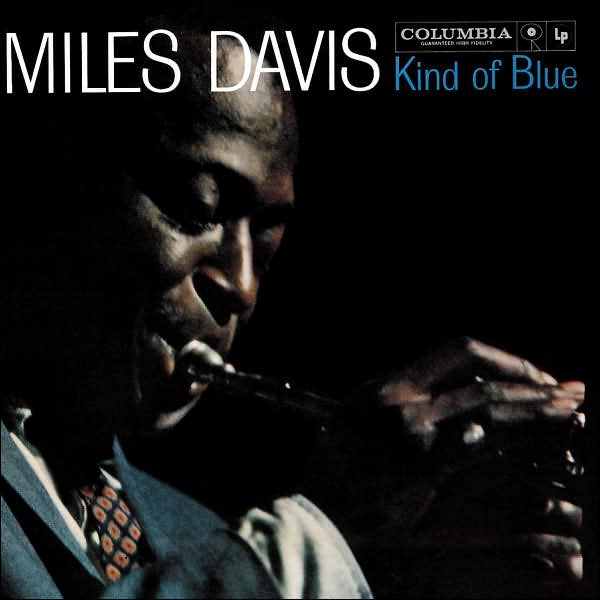 |
| Kind of Blue by Miles Davis (1959) |
"And as a third one, I guess I will be more
self-indulgent and choose something I feel more people ought to listen to. One
of my personal favorites is a band called 'Hatfield and the North,' which almost nobody in America will ever have heard of."
"They came from a place
called Canterbury, in Kent—one of a number of progressive bands from that
place—and their music combines a kind of musical intricacy with English
whimsicalness. So, a band no one’s ever heard of—Hatfield and the North—their
first album."
 |
| Raphael's School of Athens (ca. 1510), a work celebrating the greatest philosophers of antiquity. |
If you could go back to college for anything other than History, what would it be?
"Philosophy. Mainly because it is something I’ve taught myself over the years. The thing is I wasn’t a serious enough student to have taken something like philosophy seriously, so I would’ve wasted my time. But, if I could sort of idealize myself and go back as a younger version of what I am now, that’s what I would want to do."
"Before we even start off doing investigations in social science and history, I think there are fundamental philosophical questions that have to be asked—and I don’t think enough historians or social scientists ask those questions. I think all cultural analysts should be schooled in philosophy, and I wish I had been more."
Have you ever looked at your ratings on
RateMyProfessors.com?
"I did, but only because someone said I ought to. I
am thrilled that they’re as nice as they are!"
 |
| RateMyProfessors: Because no one fills out online SEIs. |
Yes, you have the 4.9/5 rating and you’ve
been bestowed with the coveted “Chili Pepper of Hotness.”
"(Laughs) I think that was bestowed on me some
years ago, I doubt I’ve picked up too many recent chili peppers."
"I mean,
students may not realize it, but we really do care about what students think of
these courses. Obviously if you’re getting high response rates consistently in
a thing like RateMyProfessors, where people could easily slag you off, that
does actually come to mean something. I take that very seriously and I’m very
proud of the fact that people enjoy the classes and find them interesting."
Greg Anderson is the department specialist in the history of ancient Greece at The Ohio State University. After attending the Universities of Newcastle and London, he obtained his Masters and PhD degrees in Classics at Yale University in New Haven, CT. He currently instructs two courses at Ohio State: "History 3210: History of Archaic Greece" and "History 3211: History of Classical Greece."
Greg Anderson is the department specialist in the history of ancient Greece at The Ohio State University. After attending the Universities of Newcastle and London, he obtained his Masters and PhD degrees in Classics at Yale University in New Haven, CT. He currently instructs two courses at Ohio State: "History 3210: History of Archaic Greece" and "History 3211: History of Classical Greece."



_thumb%5B1%5D.jpg?imgmax=800)


